
When to Prune Oak Trees: Why the Wet Months Are the Wrong Time
Quick Answer: The wet, cool months are the wrong time to prune native oaks. Rain and humidity are exactly the conditions that let sudden oak death and other fungal pathogens spread, and a fresh pruning cut is an open wound the spores can move straight into. Coast live oaks and black oaks go into a natural summer dormancy, so the safe window to prune is the dry stretch from roughly July through October, when cuts seal quickly and the pathogens that thrive in wet weather are least active. If an oak needs work, wait for dry weather or have it assessed before a saw ever touches it.
You look out at the coast live oak in the yard after a run of winter storms, notice a few crossing limbs and some deadwood, and figure a wet weekend is as good a time as any to clean it up. It feels harmless. The ground is soft, the branches are easy to reach, and the tree is dormant anyway. That instinct is where a lot of otherwise healthy oaks get into trouble.
Oaks are not like the maples or fruit trees in the same yard. In this part of Northern California, the timing of an oak pruning cut is one of the biggest factors in whether that tree stays healthy or picks up a disease that slowly kills it. Cutting during the wet season, when the air is damp and rain keeps moving spores around, is one of the surest ways to invite a problem you cannot undo. Here is what is actually happening, and why the calendar matters more than the convenience.
What Wet-Weather Pruning Actually Does to an Oak
Every pruning cut, no matter how clean, is a wound. The tree has to seal that wound off from the inside through a process called compartmentalization, walling the cut away from healthy wood so decay and infection cannot spread inward. How fast and how well the tree does that depends heavily on the weather at the moment of the cut.
A fresh cut is an open door
During the dry season, a pruning cut begins sealing quickly as exposed tissue dries and forms a protective barrier. In wet weather, wounds stay damp much longer, giving decay organisms and disease-causing pathogens more time to enter vulnerable tree tissue.
Wet weather is what pathogens are waiting for
Many serious oak diseases spread most actively during cool, rainy conditions because moisture helps spores develop and move through wind-driven rain and splashing water. Pruning during this period creates fresh wounds exactly when infection risks are at their highest.
The Disease Behind the Warning
The main reason arborists are so strict about oak timing here is sudden oak death, caused by a fungus-like organism called Phytophthora ramorum. It has reshaped the oak woodlands of Marin and Sonoma counties, and Marin was one of the first places it was ever identified.
It travels on water
The pathogen responsible for sudden oak death depends on cool, damp conditions to spread. Rain, fog, and splashing water carry spores between plants, making wet seasons the highest-risk period for infection. Dry summer weather naturally limits its movement and reduces disease pressure.
Not every oak is equally at risk
Coast live oak, California black oak, canyon live oak, Shreve's oak, and tanoak are among the most vulnerable species to sudden oak death. Mature trees face the greatest risk, making proper pruning timing especially important for preserving their long-term health and stability.
The bay laurel connection
California bay laurel often serves as a source of the pathogen that causes sudden oak death. During rainy weather, spores spread from infected bay leaves to nearby oaks, making fresh pruning wounds especially vulnerable to infection and increasing the importance of dry-season pruning.
Why the Dry Summer Window Is Different
If the wet months are the wrong time, the natural question is when the right time actually is. For native oaks in a Mediterranean climate, the answer runs opposite to the general rule for most trees.
Oaks have a summer dormancy
Unlike many deciduous trees that are pruned during winter dormancy, California native oaks naturally slow their growth during the hot, dry summer. This seasonal dormancy coincides with the lowest disease pressure, making it the safest period for routine pruning.
Wounds seal faster in the heat
Warm, dry weather allows pruning wounds to dry and begin sealing more quickly, reducing the time they remain vulnerable to infection. At the same time, moisture-dependent pathogens are less active, creating the safest possible conditions for healthy pruning.
The July-through-October window
For California native oaks, the recommended pruning season typically runs from July through October. Scheduling structural pruning, deadwood removal, and clearance work during this dry period minimizes disease risks while supporting the tree's natural growth cycle and long-term health.
TIP: If an oak has a genuinely hazardous limb during the wet season, that is a different situation from routine pruning. Safety cuts sometimes cannot wait for July. In that case, the goal is to make the fewest, cleanest cuts possible and to keep tools sanitized, rather than treating it as a full pruning session. Save the shaping and thinning for the dry window.
What Happens When the Timing Is Ignored
The damage from a wet-season oak pruning does not usually show up the next day. That is part of what makes it so easy to get wrong. The consequences build slowly, and by the time they are obvious the opening is long closed.
Bleeding cankers and dark sap
One of the most recognizable signs of sudden oak death is a bleeding trunk canker that releases dark, sticky sap. These wounds often indicate extensive internal damage, meaning the infection has usually been developing for months or even years before becoming visible.
Secondary pests move in
Disease-weakened oaks often attract bark beetles, ambrosia beetles, and wood-decaying fungi that accelerate structural decline. As decay progresses, branches or entire trees become increasingly unstable, creating serious safety hazards for nearby homes, vehicles, sidewalks, and outdoor living spaces.
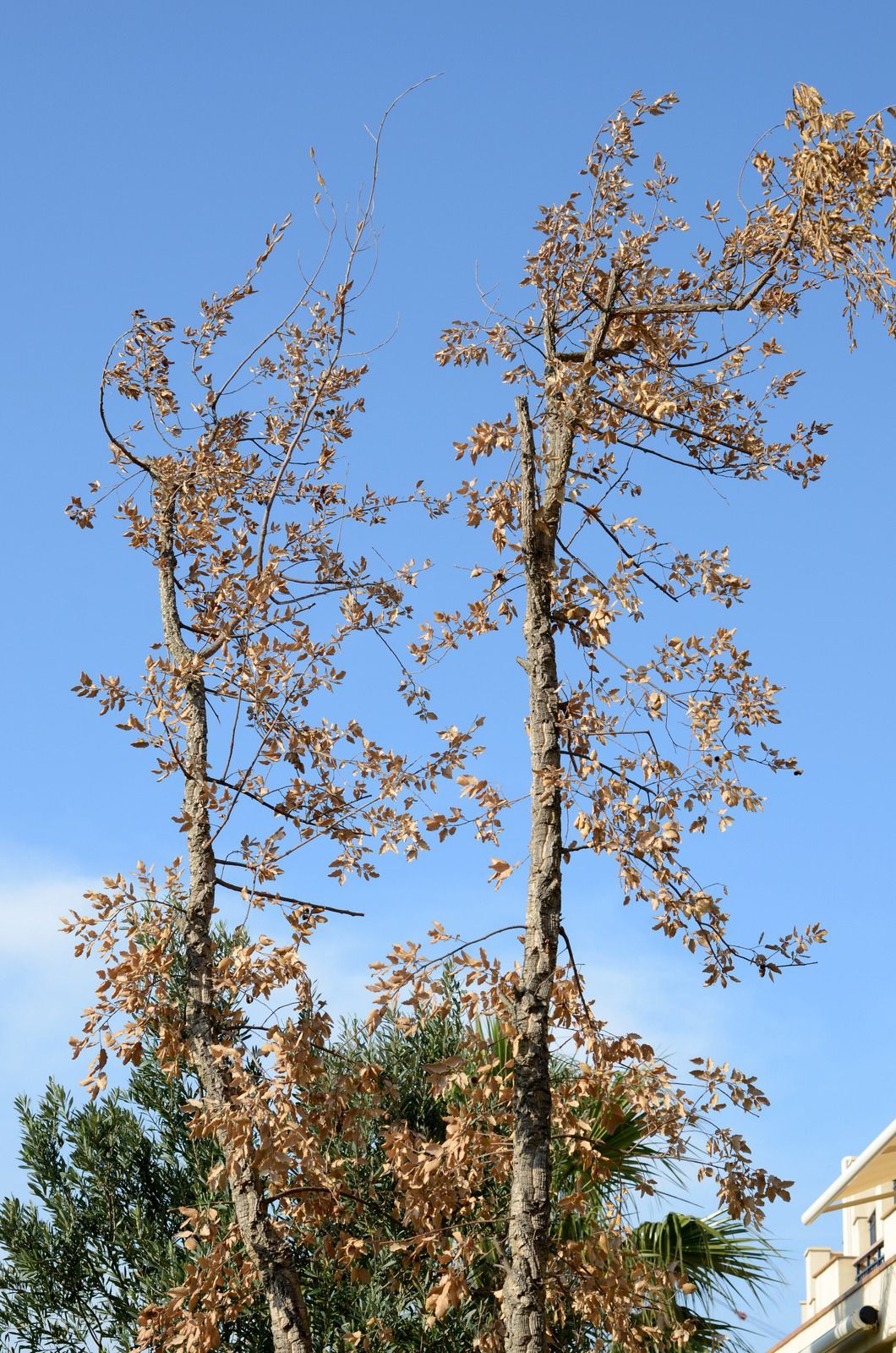
The browning that looks sudden
Sudden oak death appears to happen quickly because leaves can rapidly turn brown once the tree finally declines. In reality, the disease often develops over several years, making early prevention and proper dry-season pruning essential for long-term tree health.
WARNING: Do not treat a bleeding, dark-staining oak trunk as something to seal, paint over, or prune away on your own. Sudden oak death cannot be confirmed by symptoms alone, and cutting into a suspect tree without sanitized tools can spread the pathogen to healthy oaks nearby. Wound paints and sealers do not stop it and can trap moisture against the wound. A suspect oak should be looked at by a professional before any cutting happens.
How a Careful Pruning Plan Protects the Tree
Good oak care in this region is less about doing a lot and more about doing the right things at the right time. A thoughtful approach protects the tree you have and the healthy oaks around it.
Right season, right cuts
Healthy oak pruning starts with proper timing and careful planning. Schedule non-emergency work during the dry summer and early fall months, focusing only on dead, hazardous, or obstructive limbs while avoiding excessive pruning that can weaken the tree and increase stress.
Clean tools between trees
Disinfecting pruning tools between trees helps prevent the spread of harmful pathogens. Removing dirt and debris from equipment, footwear, and cutting tools is a simple but essential practice that protects healthy oaks from diseases carried across the landscape during tree care.
Reading the whole yard
Protecting an oak means evaluating the surrounding landscape, not just the tree itself. Nearby California bay laurels and other environmental factors can influence disease risk, making a property-wide assessment valuable for preserving healthy oaks and reducing long-term infection potential.
Frequently Asked Questions
When is the safe time to prune a native oak here?
The dry stretch of roughly July through October. Native oaks enter a summer dormancy during the hottest, driest part of the year, and that window lines up with the season when sudden oak death and other moisture-loving fungi are least active. Cuts made in dry weather also seal faster, so the wound is exposed for the shortest time.
Why is winter the wrong time to prune oaks when it is right for other trees?
Most deciduous trees are pruned in their winter dormancy, but native oaks follow a different clock. The wet, cool months are exactly when the pathogen behind sudden oak death spreads most, riding on rain and wind-driven splash. A fresh cut made then is an open wound created at the worst possible moment.
My oak is bleeding dark sap from the trunk. Should I prune out that area?
No. A trunk that weeps thick, dark, burgundy sap can be a sign of sudden oak death, which cannot be confirmed by appearance alone. Cutting into it risks spreading the pathogen, and wound sealers do not help. Have it assessed by a professional before any cutting.
Does every oak get sudden oak death?
No. The disease affects oaks in the red and intermediate groups, such as coast live oak, black oak, and canyon live oak, along with tanoak. White-group oaks like valley oak and blue oak are not thought to be susceptible, and trees usually need to be more than about four inches across before they show symptoms.
What if a branch is dangerous during the rainy season and cannot wait?
Genuine safety hazards are handled as they come up. The approach is to make the fewest, cleanest cuts needed to remove the danger, with sanitized tools, rather than doing a full pruning. The routine shaping and thinning still waits for the dry summer window.
Can I lower the risk to my oak beyond just timing the cuts?
Yes. Because California bay laurel is the strongest predictor of oak infection, managing the distance between an oak and nearby bay laurel helps, as does keeping tools clean and avoiding unnecessary wounds. A professional assessment can map where the real risk sits on your property.
Timing the Cut to Protect the Oak
Schedule a dry-season oak assessment — A native oak that gets pruned in the wrong weather can pick up sudden oak death or decay that quietly shortens its life, and the safest cuts happen on the tree's schedule, not the calendar's. Serving Novato, California for 34
years, Mayan Climber Tree Service Inc.
provides arborist-guided pruning timed to the dry summer window, sanitized tools between trees, and fire-abatement expertise across residential and commercial properties, so your oaks are cared for without inviting the diseases that thrive in wet weather. Reach out to plan the right pruning at the right time and keep your oaks standing strong for years to come.