
When to Remove a Tree: 7 Signs Your Tree Could Be Dangerous
Trees are essential to any landscape, offering shade, beauty, and environmental benefits. However, when a tree becomes unstable or unhealthy, it can quickly shift from an asset to a serious hazard. Knowing when to remove a tree is critical for protecting property, infrastructure, and human safety. Many tree-related accidents occur due to overlooked warning signs that develop gradually over time, making early identification extremely important.
Tree removal decisions are not always straightforward. Some trees may appear healthy on the outside while experiencing internal decay or structural weakness. Others may show visible damage after storms, pest infestations, or long-term neglect. Understanding these conditions helps in preventing unexpected collapse and costly damage.
This guide explains the most important warning indicators that suggest a tree may need removal. By recognizing these signs early, property owners can take informed action and reduce risk. Each indicator discussed below is based on professional arboriculture standards and real-world field observations. The goal is to support safer landscapes through awareness, timely intervention, and responsible tree management practices that prioritize both safety and environmental balance.
1. Structural Cracks and Internal Weakness
Deep Trunk Splits and Vertical Cracks
Deep trunk splits and vertical cracks are among the most serious signs of tree instability. These fractures often develop from storm stress, temperature fluctuations, or long-term structural fatigue. When cracks extend deep into the wood, they weaken internal support and reduce the tree’s ability to bear weight safely over time, overall stability.
Hollow Sections and Internal Decay
A hollow trunk is a warning sign of internal decay. When external bark appears healthy, hidden rot compromises structural integrity. Trees depend on solid internal wood for support, and cavities reduce load-bearing capacity, making them increasingly vulnerable to collapse under wind or heavy rainfall conditions.
Why It Becomes Dangerous
Trees with structural cracks are unpredictable and can fail without warning under wind pressure or heavy rainfall. Weakened sections may suddenly break, creating serious risks to property and safety. This makes early identification essential, especially in residential or high-traffic areas where falling debris can cause significant damage or injury risk levels.
2. Dead or Falling Branches
Canopy Dieback and Sparse Foliage
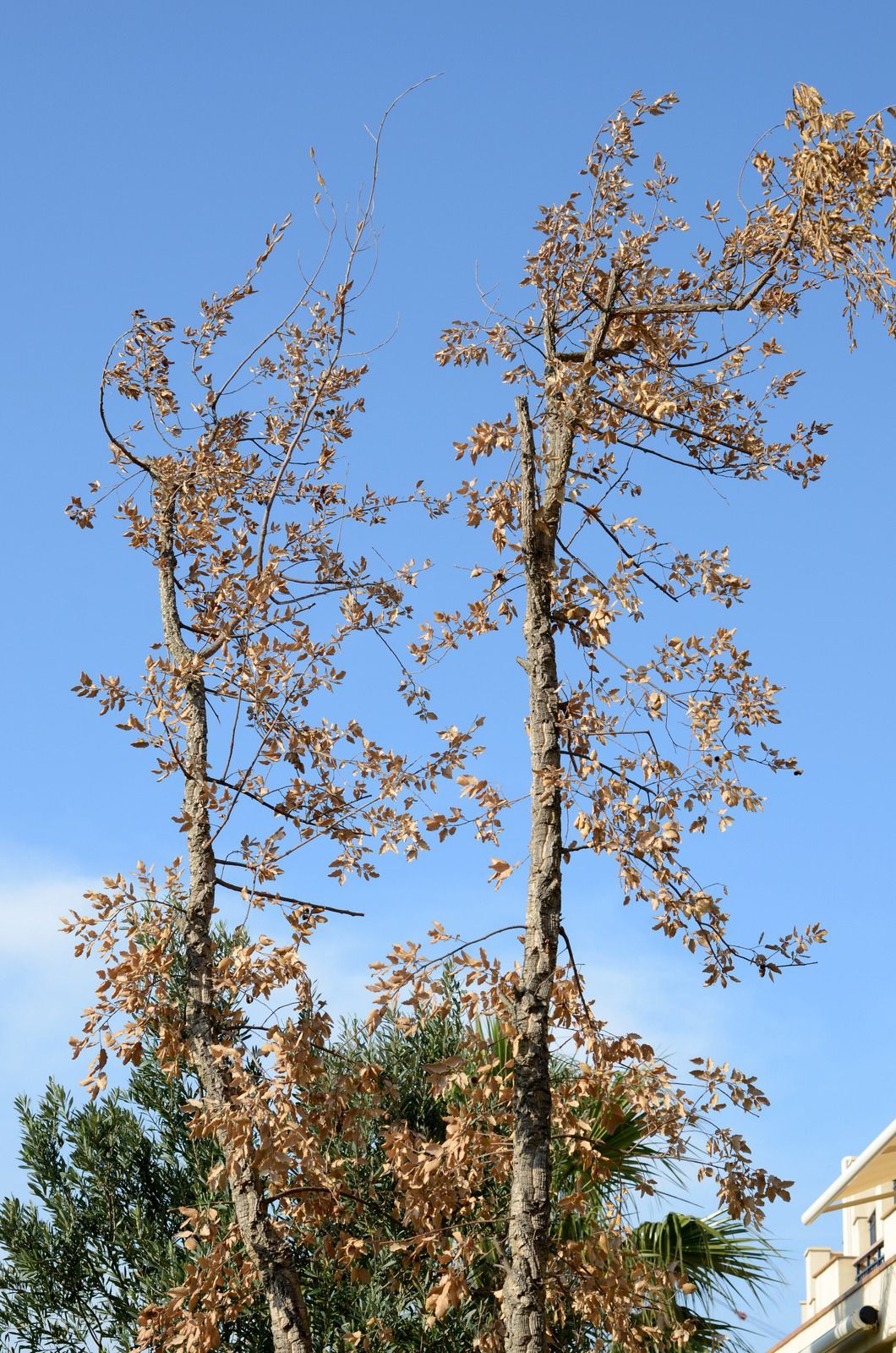
Healthy trees typically maintain consistent foliage across the canopy. When large sections of the crown become bare or stop producing leaves, it signals declining health known as canopy dieback. This condition indicates stress, disease, or root problems that reduce the tree’s ability to sustain normal growth and structural stability over time.
Frequent Branch Breakage
Dead or weakened branches break easily, even under mild wind conditions, creating immediate hazards for roofs, vehicles, and pedestrians below. These branches often fail suddenly due to reduced structural strength, making regular monitoring essential. Ignoring such warning signs increases the likelihood of property damage and safety incidents in surrounding areas.
Underlying Causes
Branch death can result from disease, pest infestation, nutrient deficiency, or physical root damage. When multiple branches begin failing simultaneously, it often indicates a deeper systemic issue affecting the entire tree rather than isolated damage, requiring careful evaluation to determine whether recovery is possible or removal becomes necessary over the long-term impact.
3. Root System Damage and Soil Instability
Exposed or Uplifted Roots
Roots anchor the tree and provide essential nutrients and stability. When roots become exposed, broken, or lifted from the soil, the tree loses structural support. This condition often occurs after storms or nearby construction activity, making the tree increasingly unstable and vulnerable to sudden collapse during high wind conditions or extreme weather events.
Soil Movement Around the Base
Shifting soil, ground cracks, or visible root lifting indicate that the tree may no longer be securely anchored. Even a healthy appearing trunk becomes dangerous without a stable root system, as instability below ground directly affects overall balance and increases the risk of sudden uprooting during storms or heavy rainfall events.
Construction and Environmental Stress
Excavation, paving, or landscaping changes can severely damage underground roots. Once root systems are compromised, recovery is often limited or incomplete, reducing the tree’s long-term stability and increasing the likelihood of structural failure under environmental stress or weather changes over time, especially in unstable soil and high rainfall regions, where areas become risky.
4. Disease, Fungal Growth, and Pest Infestation
Fungal Growth and Decay Signs
Fungal growth, such as mushrooms or conks on the trunk or base of a tree, indicates internal decay. These organisms feed on decomposing wood, often signaling advanced structural deterioration that weakens the tree from within, even when the external bark still appears relatively healthy and intact on the surface over extended time periods.
Pest Activity and Boreholes
Insect infestations such as beetles and borers create tunnels inside wood, weakening structural integrity over time. Small holes in bark or sawdust-like residue around the base are common warning signs that the internal structure of the tree is being compromised and requires immediate attention or treatment for long-term survival risk.
Leaf Discoloration and Premature Drop
Diseased trees often show abnormal leaf color, early shedding, or stunted growth. These symptoms reflect disrupted nutrient flow and declining vitality, indicating that the tree is struggling to maintain normal biological functions and may be undergoing serious internal health deterioration affecting overall stability and growth potential, especially in advanced infection stages.
5. Leaning or Sudden Change in Tree Position
Lean Development Patterns
A slight natural lean is common in many tree species, but a sudden or increasing tilt is a serious warning sign. It often indicates root failure or soil instability, which compromises structural balance and makes the tree more likely to fall under environmental stress or strong wind conditions, progressively increasing overall risk.
Soil Heaving on One Side
When soil lifts or cracks on one side of a tree’s base, it indicates that roots are being pulled from the ground. This condition shows severe instability and often precedes complete tree collapse, especially during storms, heavy rainfall, or prolonged exposure to strong wind forces in unstable weather periods.
Risk Assessment
A leaning tree creates uneven stress distribution across its trunk and root system. The greater the tilt becomes, the higher the risk of collapse during storms or heavy rainfall. Continuous monitoring is essential to assess stability and determine whether corrective action or removal is required for safety in high-risk conditions
6. Excessive Deadwood and Declining Growth
Declining Growth Patterns
Healthy trees produce new leaves, branches, and buds each season. When growth slows significantly or stops completely, it indicates internal stress, aging, or environmental imbalance. Lack of regeneration suggests that the tree’s biological systems are weakening and may no longer support normal development or recovery in changing seasonal conditions.
Deadwood Accumulation
Deadwood buildup inside the canopy increases overall weight and reduces flexibility, making branches more prone to breakage under wind or pressure. This accumulation often signals declining health and poor energy distribution within the tree, which can lead to further structural instability if not addressed through timely maintenance, preventing long-term failure risk.
Long-Term Decline Pattern
When a tree consistently shows no improvement across seasons despite favorable conditions, it often indicates irreversible decline. Continued deterioration suggests that internal systems are failing, making recovery unlikely and increasing the likelihood that removal becomes the safest option for surrounding property and environmental safety management over the long-term environmental risk assessment.
7. Storm Damage and Structural Failure History
Past Limb Breakage
Trees that have previously suffered major branch loss during storms are often structurally weakened. Even if they appear to recover, internal stress points remain within the trunk and limbs. These hidden weaknesses reduce long-term stability and make the tree more vulnerable to future storm damage or structural failure under pressure conditions.
Cracked Trunk After Weather Events
Severe weather events can create hidden fractures within the trunk that may not be immediately visible. Over time, these cracks can expand and weaken the tree’s structural integrity, making it more susceptible to failure during subsequent storms or periods of high wind stress and environmental pressure, increasing overall structural collapse risk levels.
Repeated Emergency Pruning
Frequent removal of damaged limbs suggests ongoing instability within the tree structure. A tree requiring repeated emergency pruning is often no longer structurally reliable, as recurring damage indicates deeper internal weaknesses that continue to worsen despite external maintenance efforts and seasonal care practices over time, leading to a higher risk of failure events.
Reliable Advanced Tree Safety Inspection Practices Standards
Mayan Climber Tree Service Inc.
operates in Novato, California, with 34
years of dedicated experience in
professional tree care and risk assessment. Strong focus remains on safety-first evaluations, accurate diagnosis, and responsible removal practices when required. Advanced field knowledge allows identification of hidden structural issues that may not be visible to untrained observation. Reliable service standards ensure each project is handled with precision, care, and respect for surrounding landscapes. Consistent commitment to safety and quality makes professional tree management a vital part of protecting properties and maintaining healthy outdoor environments.